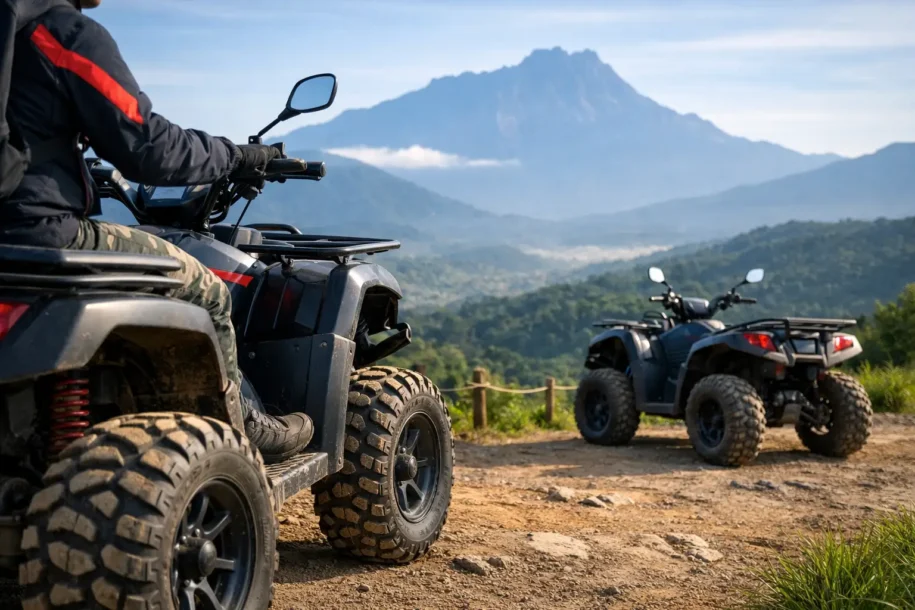
A Mount Kinabalu view, a muddy trail, and the sound of an ATV climbing through Kundasang make for an unforgettable Sabah day out. Before the engines start, though, ATV weight limits need to be clear. They are not a small booking detail. They help guides select the right vehicle setup, protect the ATV on uneven ground, and make the ride more comfortable for every guest.
For first-time riders, couples sharing a double ATV, and families planning a highland adventure, understanding the limit before arrival makes the whole experience easier. You can focus on the trail, the photos, and the fresh mountain air instead of worrying about an unexpected change at check-in.
What ATV Weight Limits Actually Mean
An ATV weight limit is the maximum load a particular vehicle can safely carry. That load is more than the rider alone. It can include a passenger, helmets and protective equipment, small personal items, and any approved cargo. On a guided tour, the stated limit may also reflect the conditions of the route, including slopes, loose ground, water crossings, and narrow sections of trail.
A single-rider ATV and a double-rider ATV do not always have the same capacity. A two-person vehicle is designed to carry a passenger in a designated seat, but it still has a total limit for both people combined. It is not enough for each person to be under an individual guideline if their combined weight exceeds the vehicle’s approved capacity.
This is why a good operator asks whether you are riding solo or sharing. It is also why the final decision may depend on the ATV model assigned for that session. Vehicle specifications, trail conditions, and guide assessment all matter.
Why Weight Limits Matter on Kundasang Trails
Kundasang riding is not a flat parking-lot activity. Trails can include climbs, descents, ruts, damp soil, and changing surfaces after rain. The ATV needs enough traction, braking control, and stability to move safely through each section.
When a vehicle carries more weight than it was designed for, steering can feel heavier and stopping distances can increase. On a hill, excess load may also affect how the ATV responds when accelerating or descending. The issue is not about taking excitement away from the experience. It is about keeping the adventure enjoyable and controlled, especially for guests who have never ridden before.
Weight limits also protect the vehicle. Guided ATVs work hard on off-road terrain, and operating within their intended capacity helps prevent unnecessary wear on brakes, tires, suspension, and drivetrain parts. A well-maintained ATV gives every group a better ride.
There is a comfort factor, too. A passenger who is squeezed onto a seat or positioned poorly cannot hold on properly. A safe setup gives both riders the room to sit correctly, follow guide instructions, and shift their body naturally as the terrain changes.
Rider Limits Are Different From Vehicle Payload
Travelers sometimes see a number described as a weight limit and assume it applies only to one rider. Ask whether the number refers to the individual rider, the combined weight of two riders, or the ATV’s total payload. These are different measurements.
For example, a double ATV may have a maximum combined rider weight that must include both the driver and passenger. A single ATV may have a rider limit that leaves a small allowance for approved belongings. The exact rule should come from the tour operator and the vehicle manufacturer’s guidance, not from an estimate made at the trailhead.
Avoid assuming that a larger-looking ATV can carry any load. Size can be misleading. The frame, suspension, engine, tire rating, and passenger design determine what a machine can handle safely.
What About Backpacks and Cameras?
Small essentials may seem insignificant, but they are still part of the total load. More importantly, large backpacks, loose camera gear, and bulky items can affect comfort and movement while riding. Bring only what you need for the session, secure it as directed, and keep both hands available for the ATV controls when you are the driver.
For scenic routes and a ride-and-hike experience toward Sosodikon Hill, ask ahead about what can be carried during the ATV portion and what should remain in transport or a designated storage area. A lighter, secure setup is often the most practical one.
How to Check ATV Weight Limits Before You Book
The best time to discuss weight requirements is before confirming your tour. Give accurate information for everyone in your party, including whether you plan to ride alone or as a pair. This allows the team to recommend the most suitable configuration rather than making last-minute adjustments on arrival.
Be straightforward. There is no benefit in guessing low or avoiding the question. Tour teams ask because they want to set you up for a safe and enjoyable ride, not because they want to make the process difficult. Accurate details are especially useful for couples booking double ATVs, taller riders, and groups with different confidence levels.
If the published booking details do not answer your question, contact the operator with these three points: the number of riders, whether you want a single or double ATV, and the approximate weight of each rider. You can also ask whether the route has a separate eligibility rule, since some courses may have limits based on terrain or ride duration.
ATV Borneo Adventure can help guests choose a suitable ride arrangement before a Kundasang session, so first-time visitors can arrive prepared for the safety briefing and trail experience.
If You Are Close to the Limit
Being close to a stated limit does not automatically mean you cannot enjoy an ATV experience. It means the operator should review the situation carefully. The right option could be a single-rider setup, a different vehicle allocation, a modified route, or a separate activity for part of the group. What is possible depends on the fleet, the day’s conditions, and the operator’s safety policy.
Do not try to solve the issue by riding without required safety gear, leaving a passenger behind on the trail, or carrying someone on a vehicle not designed for two people. Those choices create more risk, not more freedom.
A professional guide may also decide that a guest should not drive even when the weight requirement is met. This can happen if someone is unable to reach the controls comfortably, cannot maintain a safe riding position, appears unwell, or does not follow the briefing. That judgment is part of responsible guided adventure tourism.
More Ways to Make Your Ride Comfortable
Weight is one part of readiness, but a great ride starts with a few other sensible choices. Wear closed-toe shoes with secure grip, choose clothes you can move in, and expect some dust or mud on an off-road route. Tie back long hair and remove loose accessories that could distract you while riding.
Listen carefully during the safety briefing, even if you have ridden elsewhere. Every ATV model and every route feels different. Your guide will explain throttle control, braking, turning, spacing, passenger positioning, and the signals used on the trail. Beginners do not need prior experience, but they do need to follow instructions from start to finish.
If you are traveling with children or teens, check age, height, passenger, and driver requirements separately from the weight rule. These policies work together. A young guest may meet one requirement but still need to ride as a passenger, or may not be eligible for a particular route.
Weather deserves consideration as well. Sabah’s highland conditions can change quickly, and rain may make the ground more slippery. Your guide may slow the group down, adjust the route, or provide additional instruction. That is how a guided adventure stays exciting without becoming careless.
The right ATV is not the one that looks biggest in a photo. It is the one that fits its riders, suits the trail, and lets you enjoy the journey with confidence. Share your details early, follow the guide’s advice, and get ready to make your Sabah ride about the views, the laughter, and the trail ahead.
One Comment
How to Choose Double ATVs for Your Sabah Ride | ATV Borneo Adventure
[…] size matters as well. Tour operators set combined weight limits and age requirements for good reasons: they help the ATV handle safely on climbs, turns, and […]