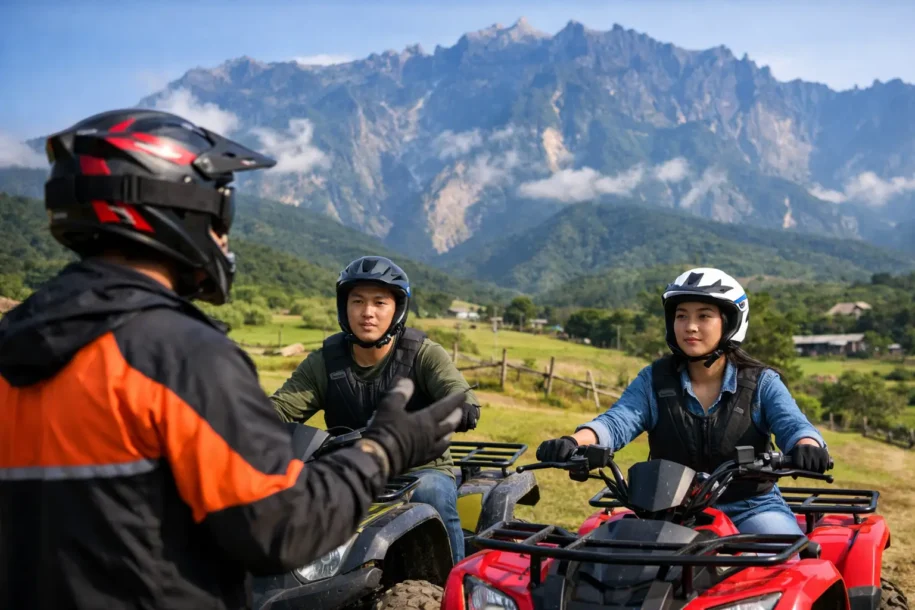
A mountain trail can look easy from a photo. Once you are sitting on an ATV with Mount Kinabalu in the distance, uneven ground, muddy patches, slopes, and turns feel very real. That is why an ATV safety briefing for beginners is not a formality before the fun starts. It is the moment that helps you ride with confidence, enjoy the scenery, and make smart choices on the trail.
For first-time riders, the goal is not to prove how fast you can go. It is to learn a few simple controls, listen closely to your guide, and let the route set the pace. A guided ride in Kundasang gives you the thrill of off-road adventure while keeping the experience approachable for couples, families, and groups who may never have ridden before.
What to Expect at an ATV Safety Briefing for Beginners
Before the engine starts, your guide should introduce the ATV, explain the route conditions, and show you how to operate the vehicle. Take this part seriously, even if you have ridden a scooter, driven a car, or tried an ATV years ago. An ATV handles differently from a road vehicle, especially on natural highland terrain.
You will normally be shown the throttle, brakes, steering, ignition, and any gear controls used on that particular ATV. Ask the guide to point out the emergency stop procedure and confirm how to signal if you need help. There is no such thing as a silly question before a ride. It is much better to ask how the brakes feel than to guess halfway down a trail.
Your guide will also explain where to line up, how much space to leave between ATVs, and when it is safe to stop for photos. On a scenic route, everyone wants the Mount Kinabalu view. The safest way to enjoy it is to stop only where your guide indicates, park securely, and keep clear of moving vehicles.
Start With the Right Riding Position
Sit centered on the seat, keep both hands firmly on the handlebars, and place both feet where the ATV design instructs you to place them. Keep your head up and look along the trail rather than down at the front tires. Your eyes help guide your direction, so focus on where you want to go.
Hold the handlebars with a relaxed but secure grip. New riders sometimes tense up and squeeze the throttle too hard when they feel a bump or turn. A calm grip gives you better control. Use smooth, gradual throttle movements instead of sudden acceleration.
When the ground becomes rough, stay loose through your arms and knees rather than fighting every movement of the ATV. Let the vehicle work over small bumps while you remain balanced and alert. Your guide may ask you to shift your body slightly on an incline or around a turn. Follow those instructions, because body position can improve stability on changing terrain.
The Trail Rules That Protect Every Rider
Guided ATV riding works best when the whole group rides as a team. The guide knows the route, weather conditions, blind corners, and areas that require extra care. Staying in formation is not about limiting your adventure. It helps prevent riders from getting separated and gives everyone enough time to react to the trail ahead.
Keep a safe following distance at all times. Leave more room if the trail is wet, dusty, steep, or slippery. Do not race another ATV, overtake the guide, or pass another rider unless you are specifically told it is safe to do so. A trail can change quickly after rain, and the rider in front may slow down for an obstacle you cannot yet see.
Ride at a pace that feels controlled. Going slower is always the right choice if you are uncertain. Beginners often discover that an ATV ride feels exciting even at a moderate speed, especially when the track includes puddles, uneven ground, hills, and forest views. Control makes the experience more enjoyable than speed ever will.
If your ATV stalls, you feel uncomfortable, or you are unsure what to do, stop safely and signal your guide. Do not try to repair the ATV, turn around, or leave the designated trail on your own. Guides are there to help, and asking for assistance early keeps a small issue from becoming a stressful one.
Respect Weather and Ground Conditions
Kundasang’s cool mountain air and dramatic landscapes are part of the experience, but weather can affect the trail. Rain may turn dry soil into mud, reduce visibility, and make slopes more slippery. That does not automatically mean the ride cannot continue, but it does mean your guide may adjust the pace, route, or riding instructions.
Listen for changes to the plan. A responsible operator will place safety ahead of a fixed itinerary when trail conditions require it. This is especially valuable for beginners, who may not recognize how quickly traction changes on wet ground.
Do not assume that a puddle is shallow or that a smooth-looking patch has good grip. Enter obstacles only as directed, maintain steady control, and avoid sharp braking or sudden turns. On loose or wet surfaces, smooth movements give the tires the best chance to hold the trail.
What to Wear for a Comfortable, Safer Ride
Wear clothes you are happy to get dusty or muddy. Long pants and a comfortable T-shirt or long-sleeve top are practical choices for an off-road ride. Closed-toe shoes with a secure fit are essential. Sandals, flip-flops, and loose footwear do not provide enough protection or stable footing.
A helmet should be worn properly for the entire ride. Make sure it fits securely and the strap is fastened before moving. If protective goggles, gloves, or other equipment are provided or recommended for the route, use them as instructed. They can make a real difference when the trail is muddy, dusty, or splashed with water.
Kundasang weather can feel cooler than Kota Kinabalu, particularly early in the morning or after rain. A light outer layer may be useful, but avoid loose scarves, flowing clothing, or anything that can interfere with the controls. Bring water, keep your phone secured, and use a small bag only if it does not affect your balance or movement.
Single and Double ATVs: Know Your Responsibilities
A single ATV lets one rider focus fully on operating the vehicle. It is often a comfortable option for guests who want to learn the controls at their own pace. A double ATV can be a fun choice for couples, friends, or family members, but the driver carries full responsibility for safe operation.
Passengers should follow the guide’s instructions for where to sit, where to hold on, and when to keep their feet in place. They should not lean unexpectedly, distract the driver, or attempt to take control while the ATV is moving. Clear communication between driver and passenger helps, particularly on rough sections or when stopping for photos.
Eligibility rules, weight limits, age requirements, and rider arrangements can vary by tour and vehicle. Check these details before booking instead of making assumptions. Choosing the right ATV configuration helps the guide provide a safer and more comfortable experience for everyone.
Good Decisions Before the Engine Starts
Arrive rested, hydrated, and ready to pay attention. Do not ride after drinking alcohol or taking any substance or medication that affects judgment, coordination, or reaction time. Let the team know about relevant injuries, mobility concerns, or anxiety about riding so they can advise you honestly.
Also, be realistic about what kind of adventure you want. Some guests are happy with a scenic beginner-friendly trail and plenty of photo stops. Others want a more active route with mud and challenging terrain. Neither preference is better, but your guide needs to know your comfort level to support the right experience.
ATV Borneo Adventure is built around guided highland experiences, where first-time riders can enjoy Sabah’s natural beauty with clear instruction and local support. The best rides happen when guests come ready to listen, follow the route, and appreciate that the guide’s advice is part of the adventure.
When the briefing is finished, take one quiet moment before you move off: adjust your helmet, check your hands and feet, look at the trail ahead, and start smoothly. That simple habit can turn first-day nerves into the kind of confidence that leaves room for the views, the laughter, and the unforgettable mountain air.
2 Comments
How to Control ATV Downhill Safely | ATV Borneo Adventure
[…] trail surface, slope angle, and whether the vehicle is carrying one or two riders. This is why the safety briefing matters. Learn where the controls are before the tour begins, test your comfort on flatter terrain, […]
Are ATVs Challenging? First-Time Rider Guide | ATV Borneo Adventure
[…] the ride, take the safety briefing seriously. It covers the controls, riding posture, spacing, trail rules, and what to do if you feel […]