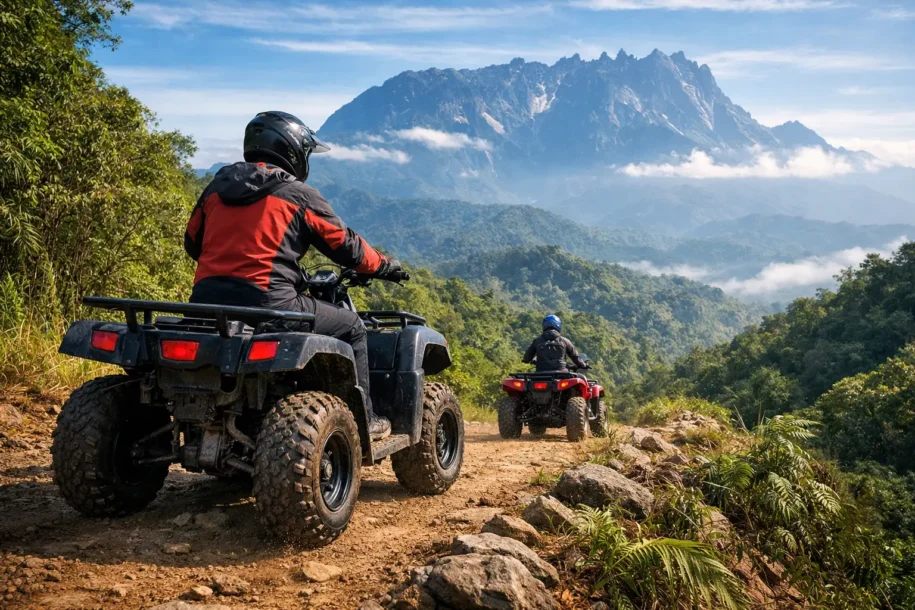
A mountain trail can change quickly. One moment you are rolling past green highland views with Mount Kinabalu in the distance; the next, you are crossing a muddy section, climbing a slope, or steering around loose rocks. Knowing how to ride ATVs safely helps you enjoy every exciting part of the experience while staying in control.
For first-time riders, an ATV tour is one of the most approachable ways to experience Kundasang and Ranau beyond the usual roadside viewpoints. You do not need to be an off-road expert. You do need to listen carefully, ride within your comfort level, and treat the trail with respect.
Start With the Safety Briefing
The best rides begin before the engine starts. During a guided ATV session, your instructor should explain the controls, demonstrate the riding position, and set expectations for the route. Pay attention even if you have driven a scooter, motorcycle, or ATV before. Every vehicle handles differently, and mountain conditions can change after rain.
Ask questions if a control is unclear. You should know how to start and stop the ATV, use the throttle smoothly, apply the brakes, reverse when instructed, and signal that you need help. There is no prize for pretending you understand. A quick question at the start can prevent a stressful moment on the trail.
Guides also share the rules for spacing, overtaking, photo stops, and trail boundaries. These rules are not there to reduce the fun. They help every rider enjoy the route without unexpected collisions, blocked sections, or people getting separated from the group.
Wear Gear That Protects You
A helmet is essential, and it needs to fit securely. It should sit level on your head, not tilt backward, and the chin strap must be fastened. If it feels loose, ask for an adjustment before you leave.
Wear clothing that can handle dust, light mud, and changing highland weather. Closed-toe shoes with a firm sole are far safer than sandals or slippers because they protect your toes and give you better footing when getting on or off the ATV. Long pants are also a smart choice for comfort around brush, gravel, and warm engine parts.
For a sunny day, bring sunglasses or eye protection if permitted by your operator, plus sunscreen. Kundasang weather can also feel cool or turn damp, so a light rain jacket is useful. Avoid loose scarves, dangling bags, or anything that could catch on the vehicle.
Learn the Right Riding Position
Good ATV control starts with your body, not just your hands. Keep both hands on the handlebars and both feet planted on the footrests unless your guide tells you otherwise. Sit upright, look ahead, and keep a relaxed bend in your elbows and knees.
Do not stare directly at a rock, puddle, or rut you are trying to avoid. Look toward the line you want to take. Your ATV tends to follow where your eyes lead, especially at low speed.
When the trail becomes bumpy, stand slightly on the footrests if your guide has shown you how. Keeping your knees bent allows your legs to absorb some movement rather than sending every bump into your back and arms. On flatter sections, sitting comfortably and staying centered gives you steady control.
Use Smooth Inputs
ATVs respond best to calm, gradual movements. Squeeze the throttle gently instead of suddenly accelerating, and brake progressively rather than grabbing the brakes at the last second. Sharp inputs can make the ride feel unstable, particularly on wet soil or uneven ground.
Speed is not the measure of a great ride. A controlled pace gives you more time to react, take in the scenery, and follow the guide safely. The most memorable Sabah ATV rides are often the ones where you feel the trail beneath you, then stop to enjoy the wide mountain views.
How to Ride ATVs Safely on Hills and Mud
Hills are where riders should slow down mentally and focus. Before climbing, follow the guide’s chosen line and keep enough momentum to continue upward without rushing. Shift your weight slightly forward when going uphill, while keeping your feet firmly on the footrests.
When descending, go slowly and stay balanced. Shift your weight slightly back, look ahead, and use gentle braking. Do not coast down a hill with no control, and do not turn sharply across a steep slope unless your guide specifically instructs you to do so.
Mud requires patience. It can look shallow but be slippery, and deep ruts may pull the wheels in a direction you did not expect. Keep your handlebars steady, maintain a smooth pace, and avoid sudden braking or hard turns. If you lose momentum or feel stuck, stop safely and signal the guide rather than spinning the wheels aggressively.
Rain can make a familiar-looking route more technical. On wet days, a responsible operator may slow the group down, adjust the route, or change plans based on trail conditions. That is good judgment, not a missed adventure. Safety decisions protect both riders and the natural trail.
Follow the Guide and Respect the Group
A guided ride is a shared experience. Keep a safe distance from the ATV in front of you, especially on slopes and muddy sections. Riding too close gives you little room if the rider ahead stops suddenly. Riding too far behind can leave you out of sight at a turn.
Stay in the order set by your guide unless you are asked to switch. Do not try to overtake for a better photo or a faster ride. Trails can be narrow, visibility may be limited, and other riders may be less experienced than you.
If you are traveling with a partner, friends, or family, resist the temptation to race or splash one another through puddles. It may sound funny in the moment, but it creates distractions and can put people off balance. Save the playful energy for the photo stop, the hike, or celebrating together afterward.
At ATV Borneo Adventure, guided routes are designed to help visitors experience the excitement of off-road riding while enjoying the highland landscape at a pace suitable for the group. Let the guide lead. Local knowledge matters when trails, weather, and visibility can shift throughout the day.
Be Honest About Your Comfort Level
First-time rider? Tell your guide. Feeling nervous after the practice area? Say so. A good guide can offer extra reminders, position you appropriately in the group, and help you build confidence before the route becomes more challenging.
This is especially relevant for double riders. The driver carries the responsibility for steering, braking, and following instructions, while the passenger should sit securely, keep their feet on the designated rests, and avoid sudden movements. Double riding can be a wonderful option for couples, families, or anyone who prefers to share the experience, but it is not always the right choice for every trail or rider size. Follow the operator’s eligibility and weight guidelines.
Do not ride if you are impaired, overly tired, or unable to operate the controls with full attention. Adventure should leave you with great stories, not unnecessary risks.
Protect Sabah’s Trails
Off-road fun and respect for nature belong together. Stay on the marked route, do not cut across vegetation, and never leave trash behind. A shortcut can damage fragile ground and create unsafe areas for future guests.
If your tour includes a scenic stop or a hike toward Sosodikon Hill, keep photo moments safe too. Park only where directed, watch your footing near uneven ground, and give yourself time to enjoy the view without rushing. The mountain backdrop is better when everyone gets home with the same happy memory.
Before you set off, take one deep breath, settle into your helmet, and listen for the guide’s signal. Ride smooth, stay curious, and let Sabah’s mountain trails give you the adventure you came for.
Leave a Reply