
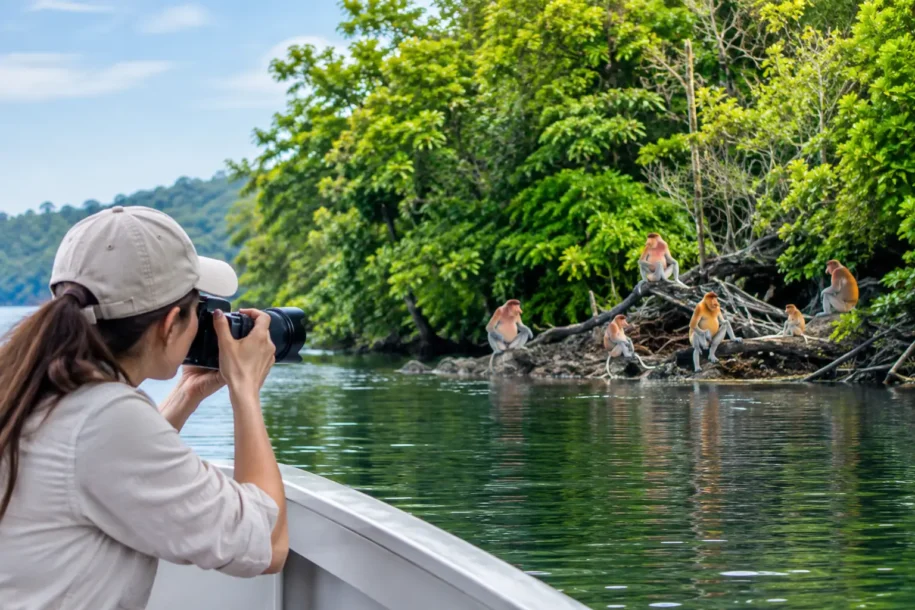
A Sabah wildlife cruise replaces the usual sightseeing checklist with something far better: a slow river journey where the next bend may reveal a proboscis monkey leaping through mangroves, a monitor lizard slipping into the water, or a sky glowing gold above the wetlands. It is an easygoing adventure, but never a predictable one. That is exactly the appeal.
For visitors staying in Kota Kinabalu, a river cruise in the Bongawan or Klias area offers a rewarding change of pace from city touring, island days, and mountain adventures. You do not need prior outdoor experience, and families, couples, and friend groups can enjoy the experience together. Bring patience, keep your camera ready, and let Sabah’s river life set the schedule.
What to Expect on a Sabah Wildlife Cruise
Most wildlife cruises begin with an afternoon transfer from Kota Kinabalu toward Sabah’s west coast wetlands. The drive is part of the experience, passing small towns, open countryside, and views that feel distinctly different from the city. Once at the jetty, you board a covered boat with a local guide who knows the river channels and the habitats that attract wildlife.
The first part of the cruise usually focuses on daylight sightings. Boats move at a gentle pace through mangrove-lined waterways, with guides scanning the trees, banks, and water surface. There is no need to rush. Wildlife is easier to spot when the boat is quiet and guests stay alert without crowding one side of the vessel.
Many evening itineraries pair the river cruise with a local dinner and a firefly viewing session after dark. On suitable nights, the riverbanks can twinkle with fireflies gathered in the trees, creating one of Sabah’s most memorable natural scenes. Some tours also include a visit to a reflective coastal area often called Sky Mirror, depending on tidal conditions and the package schedule.
The animals you may see
Proboscis monkeys are the signature sighting for many visitors. These unusual, long-nosed primates are found only on Borneo and often rest or feed in riverside trees. Seeing them in their natural habitat is completely different from seeing a wildlife photo – you may hear branches shake before you spot the group, then catch a flash of orange-brown fur high above the water.
Long-tailed macaques are also common in some areas. They are lively, social, and often easier to see than proboscis monkeys, but they are still wild animals. Do not feed them or attempt to attract them for a closer photo.
Keep an eye on the water as well. Monitor lizards may swim along the riverbank, while birds such as kingfishers, egrets, herons, and kites add color and movement to the cruise. Crocodile sightings are possible in certain river systems, though never guaranteed. Your guide will advise guests on safe behavior and will keep an appropriate distance from any wildlife.
After sunset, the focus shifts from animals to atmosphere. Fireflies are tiny, but when many gather in one tree, their synchronized flashes can look like festive lights floating above the river. Conditions matter. Rain, strong wind, moonlight, and seasonal changes can affect what you see, so it is best to arrive with curiosity rather than a fixed wildlife checklist.
Best Time for a Sabah Wildlife Cruise
Late afternoon into evening is usually the best time for a west coast river cruise. The heat is softer, animals become more active, and the changing light makes the mangroves especially beautiful for photos. It also allows one outing to include daytime wildlife, sunset, dinner, and fireflies.
Sabah can be visited year-round, but weather affects every outdoor activity. A dry, calm evening may offer clearer views and more comfortable boat conditions. Light rain does not automatically stop a cruise, and moody clouds can make for striking photographs, but heavy rain or river conditions may require changes for guest safety.
If your trip has flexibility, schedule the cruise earlier in your Sabah itinerary rather than on your final night. That leaves room to reschedule if weather affects the tour. It is a small planning decision that can make a big difference, especially during wetter periods.
How to Prepare for the River
A wildlife cruise is relaxed, but a little preparation helps you enjoy it more. Wear light, breathable clothing and comfortable shoes with a secure sole. You are unlikely to be hiking far, yet jetties and riverbanks can be damp. A light rain jacket is useful, while sunscreen and insect repellent are smart choices for the daylight portion of the trip.
Bring a small bag rather than a large suitcase. Your phone or camera, a power bank, water, and a light layer are usually enough. If you bring a camera with a zoom lens, use it instead of asking the boat to get closer to an animal. Wildlife photographs are more meaningful when the animal is calm and behaving naturally.
For families, tell children before boarding that this is a quiet-looking adventure. The excitement comes from watching and noticing. A child who knows to look up into the trees, listen for calls, and wait for the guide’s signal often enjoys the cruise far more than one expecting a theme-park style attraction.
Comfort, safety, and accessibility
Guests should follow the crew’s seating instructions and keep arms, hands, and personal items inside the boat. Life jackets are provided for boat travel, and they should be worn as directed. Avoid standing suddenly to take photos, especially when the river is moving or another guest is shifting position.
If you are traveling with very young children, older relatives, or anyone with mobility concerns, ask about boat access and transfer timing before booking. A river cruise can be an excellent multigenerational activity, but comfort depends on the individual, the weather, and the time spent traveling from Kota Kinabalu.
Motion sickness is not common on sheltered rivers, but it can happen. Those who are sensitive should consider taking their preferred remedy in advance and choose a seat where they feel most comfortable. It is better to plan ahead than to miss the sunset while feeling unwell.
Responsible Wildlife Viewing Makes the Difference
The best Sabah wildlife cruise is not the one that gets closest to an animal. It is the one that lets you watch wildlife without changing its behavior. Local guides understand where animals tend to gather and how to approach slowly, but nature always decides whether a sighting happens.
Please keep voices low near wildlife, do not throw food into the river, and never use flash photography around animals or fireflies. Avoid shining bright phone lights into the trees after dark. These simple choices protect sensitive habitats and give every guest a better chance of seeing natural behavior.
There is also a practical benefit to respectful viewing: calm animals stay visible longer. A quiet boat may be rewarded with monkeys feeding in the canopy, birds settling along the water, or fireflies continuing their glow instead of disappearing into darkness.
Pair Your Cruise With Another Sabah Adventure
A river evening works especially well after a city tour or as a restful contrast to more active Sabah experiences. Travelers who want a full itinerary can spend one day on an island, take on an ATV trail in Kundasang, hike for Mount Kinabalu views, then slow down with a sunset river cruise on another day. The mix gives you a fuller picture of Sabah – coast, forest, highlands, and local communities.
ATV Borneo Adventure can help visitors add a Bongawan Fireflies and Sky Mirror excursion to a wider Sabah holiday plan, with practical transport arrangements from Kota Kinabalu. Booking a guided experience removes the stress of arranging unfamiliar roads, river timings, and evening returns, so you can focus on the moment in front of you.
A wildlife cruise is not about collecting guaranteed sightings. It is about making space for Sabah to surprise you – perhaps with a monkey in the mangroves, perhaps with a riverbank full of fireflies, and perhaps simply with the quiet beauty of sunset on the water.
Leave a Reply