
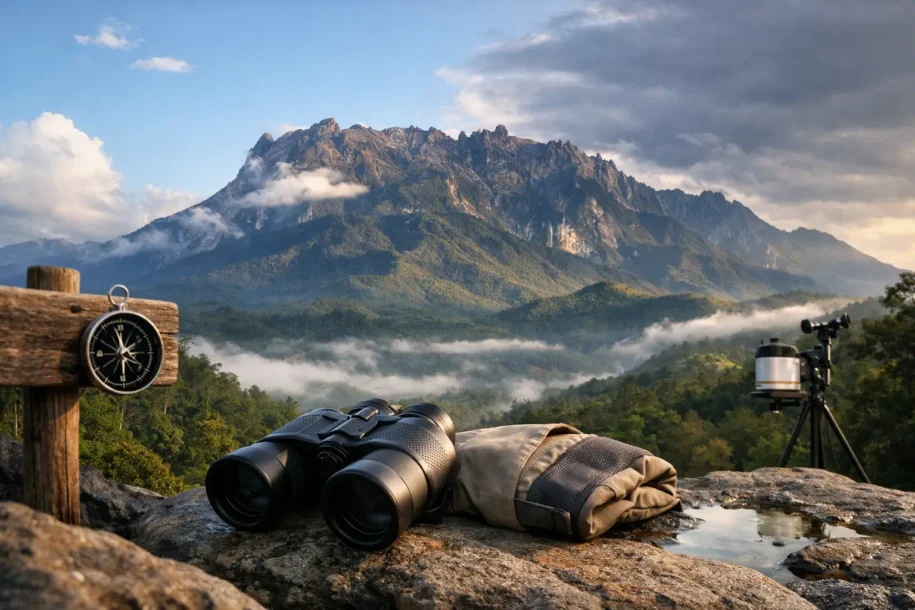
Mount Kinabalu can look completely different from one hour to the next. A bright, postcard-clear morning in Kundasang may turn into mist, light rain, and cool mountain air by afternoon. This Mount Kinabalu weather guide helps you plan around those changes, whether you are coming for scenic photos, an ATV ride, a hike to Sosodikon Hill, or simply a relaxing highland escape.
The good news is that weather does not have to stop the adventure. It simply changes how you dress, when you schedule outdoor activities, and what kind of experience you should expect. Come prepared, listen to your guide, and you can enjoy Sabah’s most famous mountain in every season.
What Makes Mount Kinabalu Weather So Changeable?
Mount Kinabalu rises more than 13,000 feet above sea level, creating its own local weather patterns. Kundasang and Ranau sit at a much lower elevation, but they still feel noticeably cooler than Kota Kinabalu. Clouds often gather around the mountain slopes, and conditions can shift quickly as warm, moist air moves inland.
For visitors, this means a forecast is useful but not final. A forecast may show rain, yet you could still have a dry morning and excellent views. On another day, sunshine in town can give way to fog on higher trails. Treat the forecast as a guide, then pack for both sun and rain.
The mountain summit has far more extreme conditions than Kundasang’s activity areas. Visitors enjoying an ATV tour or a short hill hike do not need expedition gear, but they should still expect cool air, muddy ground after rain, and strong sun when clouds clear.
The Best Time of Day for Clear Mount Kinabalu Views
Early morning is usually your best opportunity to see Mount Kinabalu at its clearest. From around sunrise through late morning, the sky often opens before cloud cover builds around the upper slopes. This is the time to take those wide mountain-view photos, enjoy a scenic drive, or start an outdoor activity feeling fresh and comfortable.
By noon and into the afternoon, clouds, mist, and showers become more common. That does not mean the scenery disappears. Low clouds rolling across farmland and forest can be spectacular, especially for travelers who enjoy moody landscapes. But if seeing the full mountain is your top priority, do not leave all your sightseeing for late afternoon.
For an ATV experience in Kundasang, a morning session often offers firmer trails and a better chance of panoramic views. Afternoon rides can still be exciting, especially after light rain creates more splash and texture on the route, but expect a muddier adventure and bring a change of clothes.
Dry Season vs. Rainy Season in Kundasang
Sabah is warm and humid year-round, and Mount Kinabalu’s surrounding highlands can receive rain in any month. Still, travelers often find relatively drier conditions from around February through April. These months can be a good choice for travelers hoping for clearer views, more comfortable hiking conditions, and outdoor-focused itineraries.
The wetter period commonly falls later in the year, particularly from October through January. Rain can be more frequent, trails can become wet, and mountain views may be hidden by cloud for longer stretches. Yet this season also brings intensely green scenery, cooler temperatures, and fewer concerns about harsh heat.
There is a trade-off. A drier month may improve your chances of a clear mountain view, but it cannot guarantee one. A wetter month may bring rain, but you may enjoy a quieter, lush, and wonderfully atmospheric Kundasang. If your travel dates are fixed, plan flexible outdoor time rather than trying to chase a perfect forecast.
What Rain Means for ATV and Hiking Plans
Light rain does not automatically cancel an ATV tour. In fact, some guests enjoy the extra thrill of riding through damp tracks and shallow puddles. Guided routes are assessed for safety, and the final decision should always rest with the local team on the ground. Heavy rain, lightning, poor visibility, or unsafe trail conditions can require a delay, route adjustment, or rescheduling.
The same applies to short hikes such as Sosodikon Hill. Wet paths can be slippery, especially on soil, roots, and steps. Wear shoes with grip, move carefully, and do not rush for a photo at the viewpoint. The best adventure is one you can enjoy safely from start to finish.
What to Wear for Mount Kinabalu’s Highland Climate
Kundasang can feel pleasantly cool compared with the coast, especially early in the morning, after rain, and at scenic viewpoints. The easiest approach is to wear light layers that you can add or remove during the day.
A breathable T-shirt with a light jacket is a practical starting point. Add long pants or activewear if you are hiking, and choose closed-toe shoes for ATV riding and uneven trails. A compact rain jacket is much more useful than a heavy coat. It protects you during short showers without taking up too much room in your bag.
Do not let the cool air fool you into skipping sun protection. When Mount Kinabalu appears under a clear sky, UV exposure can feel strong at elevation. Sunscreen, sunglasses, and a cap are smart choices, particularly for morning sightseeing and open ATV routes.
For an ATV ride, expect dust in dry weather and mud in wet weather. Wear clothes you do not mind getting dirty. Bring a small towel, a dry shirt for after your ride, and a waterproof pouch for your phone or camera. Your guide can help with safety equipment and riding instructions, but personal comfort starts with the right clothing.
A Practical Mount Kinabalu Weather Guide for Your Itinerary
Build your Kundasang plans around the mountain rather than treating it as a quick stop between other activities. Stay overnight if possible. An overnight stay gives you more than one morning to catch a clear view and removes the pressure of getting everything right in a few hours.
Schedule your must-do outdoor activity early, then keep the afternoon flexible. You might use later hours for a relaxed local meal, a scenic café, souvenir shopping, or a gentle drive through the highlands. If the skies stay clear, you have extra time for photos. If rain arrives, your day still feels well planned.
Travelers coming from Kota Kinabalu should also allow extra time for the drive. Mountain roads, rain, fog, and holiday traffic can affect journey times. Starting early creates a calmer day and gives you room to enjoy the scenery instead of watching the clock.
If you are booking a guided activity, tell the operator about young children, first-time riders, mobility concerns, or any tight travel connections. A good local team can recommend a suitable session, explain what to bring, and help you choose an experience that matches the conditions. ATV Borneo Adventure, for example, welcomes first-time riders with safety instruction and guided Kundasang routes designed for scenic fun as well as off-road action.
Weather Checks That Actually Help
Check the forecast the night before, then check it again on the morning of your activity. Look beyond the simple rain icon. Hourly forecasts, rainfall intensity, wind, and thunderstorm alerts offer more useful clues than a daily symbol alone.
You should also look outside. Can you see the mountain? Are clouds sitting low over the road? Is rain steady, or is it a passing shower? Local conditions often tell a clearer story than a forecast covering a large area.
Most importantly, follow local safety advice. Guides and drivers see these roads and trails in changing weather every day. If they recommend waiting for a storm cell to pass, changing the route, or wearing extra protective gear, that is part of a well-managed adventure, not a lost experience.
Make Room for the Unexpected
Mount Kinabalu is not a destination that performs on command. Some days it gives you a sharp summit view at sunrise. On others, it hides behind silver clouds while the farms, forests, and rolling hills take center stage.
Pack a rain layer, book your biggest outdoor plans early, and leave a little space in your schedule. When the clouds shift and the mountain appears, you will be ready to stop, look up, and enjoy the moment.
Leave a Reply